
A useful career programme gives students something to do after the event: investigate a role, try a relevant task, discuss what they learned and return with better questions. The event starts that process. The programme keeps it moving, with a visible next step and someone responsible for helping students take it.
For an institution, the practical question is how to make that follow-through manageable. You cannot schedule a personal counselling session after every student clicks a career profile. You can design a sequence that lets students explore independently and brings a human into the conversation when a decision needs one.
What should students leave an event with?
Students should leave with a question they want to investigate and a clear way to investigate it. A long list of occupations is less useful if nobody knows where to start. Ask participants to choose one role that surprised them, name something they still do not understand and decide what they will look at next.
For a careers talk, that might mean exploring what a professional actually does during a working day. For a university session, it might mean checking the entry requirements of a relevant course. For a subject-choice workshop, it could mean discussing which options preserve the routes a student wants to investigate.
Keep the task small enough to complete without another appointment. The invitation should name the activity and its purpose, rather than sending everyone a general reminder to explore their future.
What does research say about ongoing career exploration?
Career development deserves attention across the year. The OECD's career guidance overview describes evidence linking how teenagers explore, experience and think about work with their later employment outcomes. These are associations across research datasets; they do not establish that buying a particular platform will improve placements.
For programme design, the useful implication is to offer different ways to investigate a future. Reading about a role, speaking with someone who does it and reflecting on a practical experience answer different questions. An institution can build those opportunities into its calendar without promising a particular career outcome.
How can a career profile become an activity?
Give students a reason to read the profile and a way to respond to it. Ask them to identify a task they would enjoy, a skill they would need to develop and a part of the work they had not expected. The answers make a follow-up conversation much more specific than asking whether they liked the session.
A student interested in design could compare the activities described in two roles and explain which appeals to them. A student considering a data career could investigate the difference between building an analysis and presenting its findings. These are suggested activities, not examples of measured student results.
Avoid treating a saved role as a final choice. A shortlist records what someone wants to investigate. It should be easy to revise as they learn more.
Where do assessments fit in the programme?
Assessments can contribute questions and perspectives for a discussion, provided their intended use and limitations are understood. They should not close down exploration by turning a report into a fixed statement of what a student can become.
An interest result might give a student several activities to investigate. An aptitude result may suggest questions for a trained practitioner about strengths and support. Neither should be confused with how often the student has used a dashboard. Activity, interests and assessment results describe different things.
After sharing a report, ask the student which parts made sense, what surprised them and what they want help understanding. Allow space for disagreement. A conversation can reveal missing context that a score alone cannot supply.
What should the institution track?
Track the actions that help your team support the programme. Start with participation in the activity, the student's stated interests, what they have explored and whether a follow-up is due. Add a short note that explains the next conversation rather than an unexplained label.
A return visit can be a useful operational signal. It does not prove understanding. A completed task does not establish career readiness by itself, and a quiet student may need help using the system rather than another message about participation.
Decide who will review the information and when. A dashboard that nobody checks adds work without changing the experience. A short weekly review of unresolved questions can be more useful than a large report produced once a term.
How can a small team make the programme manageable?
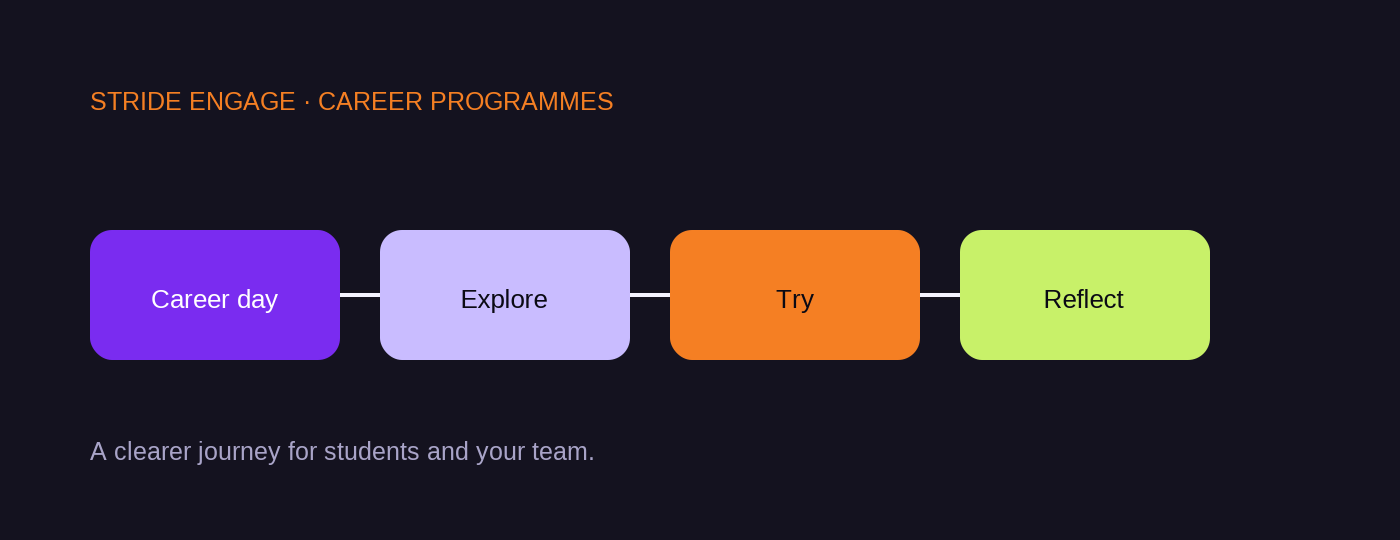
Use a repeatable sequence and leave room for students who need a different pace. One possible sequence is an opening activity, independent exploration, a practical experience and a reflection conversation. This is a planning suggestion; adapt it to the students' ages, timetable and available support.
Group conversations can address common questions. Individual appointments can focus on decisions that require personal context. Write down who is responsible for the next step, so a student is not repeatedly asked to explain the same issue to different people.
Review the sequence after running it. Look at where students stopped, what they asked and whether the staff team could respond. Change the activity or instructions when they were unclear. More reminders will not fix a task that people do not understand.
What can you put in place this week?
Choose one existing event and write its follow-up before promoting it. Name the student activity, the destination, the person reviewing responses and the date of the next conversation. Ask a colleague to follow the instructions as a first-time visitor. If they cannot tell what happens next, simplify the sequence.
You do not need to redesign the whole academic year at once. A clear continuation from one event gives the team something concrete to evaluate and improve.
How can Stride Engage support the journey?
Explore Stride Engage to see the connected student and institution experience, including career exploration, activities, reports and relevant follow-ups. Use the demonstration to discuss how that journey would fit your existing programme.
Sources
OECD: Career guidance, accessed 11 November 2026. Research context is distinguished above from our suggested programme design.